

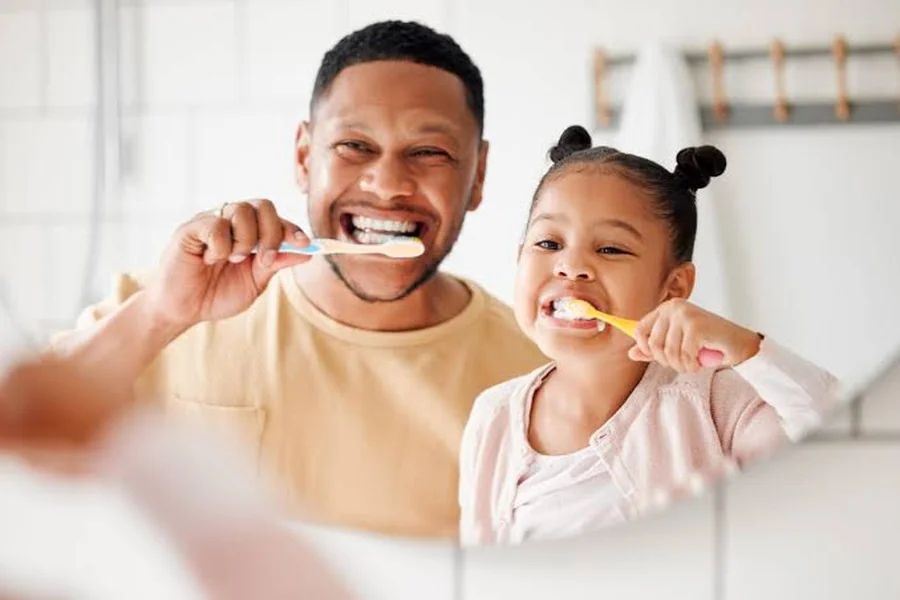
You remind your child to brush, they shrug you off, and somehow a two minute routine turns into a daily argument. A dental visit can feel the same way. One parent is trying to stay calm, one child is scared or embarrassed, and nobody leaves feeling understood. That tension has less to do with teeth than with trust, language, and how health gets talked about at home, even when families are also hearing about options like personalized implant treatment in Crest Hill, IL.
How Family Dentistry Improves Communication Between Parents And Kids comes down to one simple idea. When one dental office cares for both generations, it gives everyone a shared frame of reference. Children hear the same words their parents hear. Parents learn how to explain oral health in ways that do not sound like warnings or lectures. A family dentist often becomes a steady translator between what a child feels and what a parent is trying to teach.
Family dental care creates a shared language at home
Kids do not resist every dental habit because they are stubborn. Often, they do not fully understand what is happening in their mouths, or they hear oral care as a list of commands. Brush better. Stop eating that. Open wider. That kind of language can make a child shut down, especially if they already feel nervous.
Family dental care changes that pattern because the same office explains care in age appropriate ways to everyone involved. A six year old might hear that sugar bugs feed on leftover food. A parent might hear how plaque builds and why timing matters. The message is still the same, and that matters. At home, you can repeat what the dentist said without turning it into a power struggle. Your child recognizes the words, the routine feels familiar, and the conversation gets easier.
This is one reason family dentistry communication benefits go beyond cleanings and checkups. The dentist is not only treating teeth. They are helping your family build a healthier way to talk about care, discomfort, and daily habits.
Children speak more openly when the dental setting feels familiar
A child who sees different providers in different offices may feel like every visit starts from zero. New faces, new rules, new expectations. That can make them quiet, guarded, or defiant. In a family practice, the setting becomes known. They may see a parent in the chair, notice that adults get guidance too, and realize the visit is not a punishment aimed at them.
That familiarity often leads to better honesty. A child is more likely to admit that brushing hurts, that a loose tooth feels scary, or that they skipped flossing all week when they do not feel singled out. Parents benefit too. You can ask questions in front of your child and model that health conversations are normal, not shameful.
Reliable information helps support those talks at home. MedlinePlus offers clear guidance on children’s dental health, including cavity prevention and early care habits. The American Academy of Pediatrics also shares practical oral health advice for families through HealthyChildren.org.
Parents get support for hard conversations before small problems grow
Sometimes the real issue is not brushing. It is guilt, confusion, or mixed messages between caregivers. One parent is strict about routines, the other gives in when the child protests. A grandparent offers candy as comfort. A teen stops smiling in photos because they are embarrassed about their teeth, but no one says it out loud.
A family dentist can spot these patterns early because they see the bigger picture. If a child keeps getting cavities, the discussion can move past blame and toward habits, timing, snacks, dry mouth, or technique. If a child is afraid of treatment, the dentist can help you find words that calm instead of alarm. Saying “the dentist is going to count your teeth and clean away the sugar bugs” lands very differently from “if you do not brush, they will have to drill.”
That shift matters. Fear based language may get short term compliance, but it often damages trust. Clear, calm language builds cooperation that lasts.
Family dentistry helps parents and kids stay on the same page
| Situation | Separate Dental Providers | Family Dentist |
|---|---|---|
| Explaining oral hygiene at home | Advice may sound different from office to office | Shared terms and routines are easier to repeat |
| Child anxiety before visits | New environment can increase stress | Familiar staff and setting often lower fear |
| Tracking habits and patterns | Family context may be missed | Provider can notice shared habits across the household |
| Parent child communication | Talks may feel like correction or conflict | Dental guidance becomes a neutral reference point |
| Scheduling and follow through | More appointments in different places | One office can simplify routines for everyone |
The convenience matters, but the communication side matters just as much. When care is coordinated, children see oral health as part of family life, not a separate problem they get blamed for.
Small changes in communication improve daily dental habits
Start with neutral language. Replace blame with observation. “Your gums look sore” works better than “You never brush right.” “Let’s try brushing the back teeth together” works better than “You always miss spots.” Children respond better when they do not feel judged.
Repeat the dentist’s exact phrases at home. If your child heard “brush in little circles” or “count to ten on each side,” use those same words. Familiar phrasing lowers resistance because it feels known, not invented in the middle of a tense moment.
Make checkups part of family routine, not a reaction to pain. When children only go to the dentist after something hurts, they connect dental care with trouble. Regular visits with a general family practice help them see oral health as normal upkeep, the same way meals, sleep, and baths are normal.
Better conversations lead to better long term oral health
Children learn how to talk about health by listening to how adults talk about it. If dental care is framed as punishment, they carry that stress with them. If it is framed as care, skill, and routine, they build confidence. That is the deeper value of a family based dental approach. It supports cleaner teeth, but it also supports calmer mornings, fewer arguments, and more honest conversations when something feels wrong.
If your home has turned brushing or dental visits into a point of stress, a family dentist can help reset the tone. The goal is not perfection. The goal is a routine your child understands, a message you can repeat without fighting, and a relationship with care that feels steady instead of tense.
